
Forensics: Crime Scene Detective — Ballistics Guide
How to document bullet evidence and reconstruct trajectories in Forensics: Crime Scene Detective ballistics system.
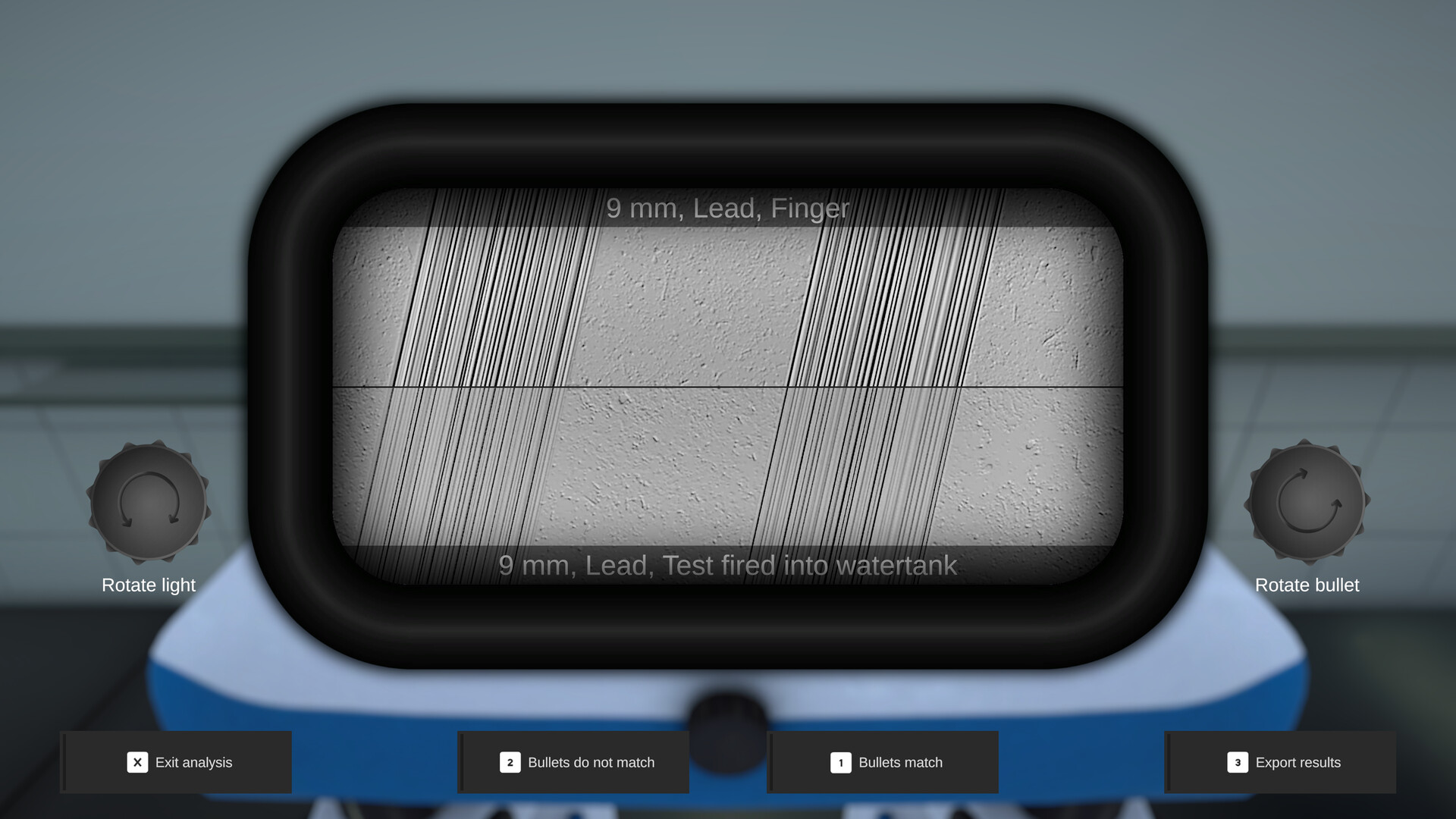
Ballistics analysis in Forensics: Crime Scene Detective requires careful crime scene documentation followed by laboratory trajectory reconstruction. You must document bullet holes, remove projectiles, and use trajectory rods to determine shooting angles — helping distinguish murder from self-defense, accident, or staged scenes.
Crime Scene Documentation
- Locate all bullet impact points on walls, furniture, and objects.
- Place evidence markers at each bullet hole.
- Photograph every impact point with marker visible.
- Only after photography, remove embedded projectiles.
- Collect projectiles in evidence containers for firearm comparison.
Trajectory Reconstruction
At the projectile recovery tank, insert trajectory rods through documented bullet holes. The convergence point of rods indicates the shooter's position. Compare this with witness statements and physical evidence to classify the shooting scenario.
Forensics: Crime Scene Detective — ballistics tutorial gameplay

Classifying Shooting Events
- Murder: Trajectory points to external shooter, multiple wounds, no defensive evidence.
- Self-defense: Trajectory from victim toward threat, close-range wounds.
- Accident: Single discharge, erratic path, witness corroboration.
- Staged: Rod angles inconsistent with body position or moved evidence.
Firearm Comparison
Collected projectiles can be compared against firearms at the ballistics workstation. Rifling marks on bullets link them to specific weapons. Combine ballistic results with fingerprint evidence on the weapon and DNA from blood spatter for comprehensive conclusions.
Frequently Asked Questions
When do I remove a bullet from a wall?
Only after placing a marker and photographing the bullet hole. Removing projectiles without documentation violates chain of custody.
Can trajectory alone determine guilt?
No. Trajectory data must be combined with DNA, fingerprints, witness statements, and digital evidence for a supported conclusion.
What is the projectile recovery tank?
A water-filled laboratory tank where you insert rods through impact points to visually reconstruct the bullet path.
Related Pages
Getting Started
First-day tips for new players after launch.
Evidence Collection
The mark-photograph-inspect-collect workflow.
Fingerprint Analysis
UV lighting, dusting, and lifting techniques.
DNA Analysis
Biological sample collection and lab comparison.
Digital Forensics
Device imaging, decryption, and chip extraction.
Case Rating Tips
How to earn S ratings and avoid undiscovered leads.
Demo Guide
How to play the free Steam demo.
Tips & Tricks
Post-launch community strategies and workflow shortcuts.
Steam Deck Guide
Portable play settings and performance tips.